

Honeywell Inncom

Accelerate Upward is proud to be the first Honeywell channel partner in Virginia. Honeywell is the global leader in connected, building automation and Energy Management Systems, purpose-built for hospitality, senior living, and multi-family dwelling unit environments

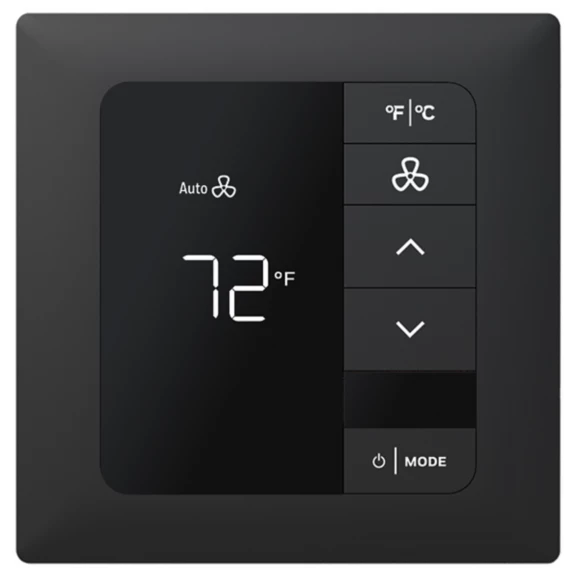
Most properties condition empty rooms, heat unoccupied common areas, and run HVAC at full capacity around the clock. That waste adds up fast. Honeywell’s intelligent thermostats and building automation systems adjust in real time based on occupancy, time of day, and guest or resident preferences; delivering verified savings of up to 40% or more on utility costs with minimal impact to guest or resident comfort.

  • Occupancy-based HVAC control at the room and zone level
  • Centralized energy management dashboard across all properties
  • Real-time monitoring and automated reporting
  • Scalable across single properties and multi-site portfolios
  • Expandable to integrate with Honeywell locks and lighting for larger savings, as well as a safer and better overall guest or resident experience.

The ROI is fast. Most properties recover the cost of implementation through utility savings alone within 24 months.

Check out what Honeywell has delivered for other properties and imagine what those results look like on your operating statement.

Washington Hilton INNCOM
Washington Hilton exterior

Case Study - Washington Hilton • Washington, D.C.

Third-Party Utility
Validates 41% Energy
Savings with INNCOM

A 6-month, independently metered study by the D.C. Sustainable Energy Utility confirmed that INNCOM's Networked EMS uses 41% less energy than a standalone system; 57% less than a traditional thermostat.

1,107 Rooms Aug 2018 – Jan 2019 DCSEU Validated Hilton OnQ Integration
57%
HVAC energy savings vs. traditional thermostat (Networked EMS)
41%
Less energy than standalone EMS; independently metered
27%
Savings from Standalone EMS alone vs. traditional thermostat

Guestroom HVAC Energy Use - kWh per Room

0 50 100 150 200 190.1 kWh Traditional Thermostat 139.1 kWh Standalone EMS 27% savings 82.1 kWh Networked EMS + PMS 57% savings

The Challenge

The Washington Hilton - a 1,107-room, 4-star property near Dupont Circle - wanted to quantify exactly how much additional energy savings a PMS-integrated, networked EMS would deliver over a standalone system.

Owner Clearview Hotel Capital partnered with Hilton and the D.C. Sustainable Energy Utility (DCSEU) to design a controlled, independently metered study. They didn't want Honeywell's own data. They wanted a third party to meter the same rooms.

The Process

The DCSEU team worked entirely independently from Honeywell, metering 8 test guestrooms over 6 months; including peak HVAC demand months (August and January). Rooms spanned different floors, building orientations, and configurations.

Three room types were compared: a traditional thermostat baseline, a Standalone EMS with door sensor, and a Networked EMS with door/window sensors integrated with the Hilton OnQ PMS via INNcontrol 3 software.

Location
Washington Hilton, 1919 Connecticut Ave NW, Washington D.C.
Study Period
August 2018 – January 2019 (6 months)
Independent Meter
DENT Instruments ELITEpro XC; monitored by DCSEU
HVAC Type
Heat pump
PMS Integration
Hilton OnQ via INNcontrol 3 Supervisor Software
INNCOM Equipment
e7 EMS Thermostat; S241 & S541.RF Door/Window Sensors; B578 Deep Mesh Router

Conclusion

The Networked EMS exceeded both performance and ROI expectations. The Standalone EMS delivers solid savings at lower upfront cost; the Networked EMS, integrated with the hotel PMS, delivers 2x the energy savings and a materially stronger return on investment.

Hotels with existing standalone systems are recommended to upgrade to Networked EMS. New properties should install Networked EMS with PMS integration from the start.

Results reported independently to Hilton and Clearview by the DCSEU - not by Honeywell.

Download Full Case Study PDF

Book Your Free Consultation